

What if this is only 1996 for AI, not 1999?
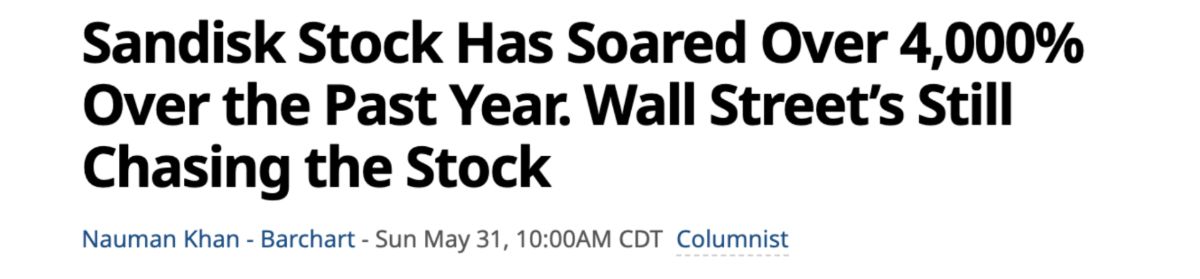
You see headlines like this…
And you see charts like this…

And perhaps you think…
It's too late. The ship has sailed.
A generational bull market in tech stocks has, against a backdrop of relentlessly bleak macroeconomic and geopolitical news, stormed higher and higher for the past four years.
The biggest companies on Earth are now worth trillions.
ChatGPT has more weekly users than all but two countries have people.
Every earnings call has become an AI earnings call.
Nvidia keeps setting new records for consecutive knock-out quarters.
The trade looks crowded and the valuations look stretched. And in the back of your mind — or in the front, if you follow this sector daily — a voice says the easy money was made long ago, by those who moved early.
This, Reader, is the heady cocktail of FOMO and FUD — and a lot of investors are drinking it right now. They watch others ride the unstoppable money machines higher, equal parts envious and fearful.
Surely nothing this profitable can last?
History agrees, up to a point. Roaring bull runs end sooner or later, and the ones that go vertical tend to correct just as violently (see below...).
But this AI market has already proved a great many people wrong a great many times.
So in this week's Benchmark, I'm going to share 12 facts that pose the question:
What if 2026 isn't the equivalent of the Dot Com Bubble's final phase in 1999...
But the equivalent of 1996?
Just three years separate 1996 from 1999 on the calendar.
But on the adoption curve, they're a world apart.
This is the normal distribution of tech adoption:

This is the NASDAQ composite through the 2000 dot com crash:

And this is the percentage of American adults using the internet between 1995 and 2014:

As you can see, the adoption chart doesn’t register the tech stock crash at all.
So people talking about an AI bubble might really be talking more about an AI stock bubble.
But in terms of adoption, it’s possible that this is 1996; very early days.
So the feeling that you're late is worth questioning.
In 1996, Netscape had already gone public.
‘The internet’ was taking over magazine covers.

People were already whispering about a bubble.
And yet Amazon hadn't listed. Google didn't exist. Barely one percent of humanity had ever been online.
Anyone who felt late in 1996 was early by a decade.
Here are 12 numbers that suggest the same might be true for AI in 2026:
1. Compounding hyperscaler spending
Four companies — Microsoft, Amazon, Alphabet and Meta — will spend roughly $700 billion on capital expenditure this year.
Nearly double last year.
Up from barely $200 billion in 2024.
They are pouring the roads, ports and power stations of the AI age at a pace the world has never financed before.
2. The fastest-adopted product in human history
ChatGPT crossed 900 million weekly users in February.
It doubled in twelve months.
It reached 100 million users in two months. Instagram took two and a half years.
3. Nine out of ten people are not using AI yet
Those 900 million weekly users represent about 10% of the world's adults.
Closer to 15% of the people already online.
The fastest-growing product in history, and it still hasn't reached the other 90%.
Consider the car:

4. Four in five people have never even typed a prompt
ARK Invest puts it plainly: Only roughly 20% of smartphone users have ever used an AI chatbot.
And a chatbot is the easy part.
Actual AI agents — the ones doing multi-step work — sit far below even that.
5. Everyone is talking. Almost no one has shipped.
Ask companies, and 88% will tell you they 'use AI'.
Ask the US Census Bureau, which measures what firms actually run in production, and the number is about 10%.
The gap between those two figures is a signal.
6. Ninety-five cents of every ‘transformation’ dollar hasn't come home yet
Of the companies that have deployed AI, just 5.5% report a real earnings impact.
MIT found the same thing from the other direction: Roughly one AI pilot in twenty ever reaches the bottom line.
7. A $700 billion engine that barely turns the economy
Of the 2.2% the US economy grew in 2025, only about 0.2 points came from all that AI investment.
Goldman Sachs' chief economist has a blunter word for it: ‘basically zero’.
The reason is almost funny — most of the gear is imported. As he puts it, America's AI boom is mostly adding to Taiwanese and Korean GDP, not its own.
8. The gun, not the finish line
This is the same Goldman that projected AI could add 7% to global GDP over a decade.
Both things are true at once.
The promise is enormous. The delivery has barely begun.
9. The last time this happened, it took forty years
Electricity was commercialised in the 1880s. Factories rushed to install it.
And for four decades, productivity barely moved.
The gains didn't arrive until the 1920s — once a generation of managers stopped bolting motors onto steam-era factories and redesigned the whole building around the new technology.
Forty years from the switch to the payoff.
10. Each wave hits faster than the last
The telephone needed 70 years to reach half of America.
The PC, 26.
The cellphone, 16.
The smartphone, six.

11. If AI was the iPhone
When smartphones sat where AI chatbots sit today — about 20% penetration — the year was 2010.
The iPhone was three years old.
We were far closer to the beginning than to the 82% we would eventually reach.
12. A prodigy that trips on the stairs
At the July 2025 International Mathematical Olympiad, three AI systems hit gold-medal level for the first time: Google DeepMind, OpenAI, and Harmonic, each by a different method.
The two headline ones were Google DeepMind's Gemini (the Deep Think version) and OpenAI's reasoning LLM, both solving 5 of 6 problems for 35/42 — exactly the gold threshold.
Only about 10% of the elite human contestants won gold that year.
And yet…
Show a leading AI model an ordinary analogue clock and it reads the time correctly about one in ten times — worse than a random guess on some clock faces.
This is what a technology looks like before it grows up.
So…
Is it late, or early?

The hype might suggest late. But the adoption and investment numbers say early.
Twenty percent of phones, 10% of firms, basically nothing in the GDP figures yet — that's probably not a market running out of room.
Which is not to say AI stock prices are cheap. They might be wildly expensive; vertical charts have a way of correcting. The bubble talk could prove right.
But a stock bubble and a dead technology are not the same thing.
The internet crashed 78% in 2000 and still went on to transform the world.
This week's quote:
— Attributed to Vladimir Lenin
Subscribe to The BenchmarkThe BenchmarkSubscribe toInvest in knowledge,
Thom
The Benchmark
Read more: Office workers digging their own graves.
Share: Forward this email to someone you know would appreciate it.
Connect: Add me on LinkedIn — I post about the stories and insights in the newsletter most days.
Become a reader:.
Enjoyed this issue?
Subscribe to The Benchmark
Weekly insights on markets, investing, and portfolio strategy.