
The War on Cash: What’s really going on
On March 8, citizens of Switzerland voted to enshrine in the country’s constitution their right to use banknotes and coins.
More than half the nation’s voters turned out to cast their vote, nearly three quarters of them in favour of protecting physical money.
If you didn’t know this had happened, I don’t blame you. There are plenty of other events dominating the media at the moment.
But this is an important moment in financial history.
According to Bloomberg, ‘the vote marks a rare moment of circumspection on the nature of money that sought to take the electoral temperature rather than simply rely on consumer behavior to judge the views of citizens’.
Cash use has been declining in Switzerland — from 70% of all transactions in 2014 to just 30% in 2024.
But the Swiss, respected the world over for their sophistication and elite socioeconomic status, remain staunchly fond of their francs.

They even use coins dating back to the mid 1800s to this day.
But while the Swiss government has given its people a voice in how they store and spend their money, other nations are tightening their grip.
Three countries currently engaged in ‘monetary cleansing’
There are about 40 nations actively pushing in the opposite direction right now.
These are three of... note?
1. Israel: Criminalizing Cash
While many countries today enforce transaction limits, Israel has moved beyond this, targeting the act of simply holding cash.
As part of the 2026 budget legislation, the Israeli government proposed a law to criminalize the possession of more than NIS ₪200,000 (USD $54,000) in cash by private individuals.
This means that at ₪199,999, you’re an honest citizen. But one shekel more and you’re a criminal.
The Israeli government also imposes cash transaction restrictions of ₪6,000 with dealers, and ₪15,000 for private transfers.
Also in 2026, they are considering abolishing the ₪200 bill (pictured below), which would make it more difficult for citizens to store large sums of money physically.

2. Denmark’s Demonetization Model
Denmark is forcing capital onto digital rails through the total withdrawal of high-value notes.
The Danish central bank has decreed that as of May 31, 2026, all 1,000 Danish kroner banknotes will officially become worthless.
By removing the highest denomination, they’re effectively narrowing the cash economy.
Because if you hold these notes and you don’t deposit them into a traceable bank account before May 31, they cease to be worth anything.
On top of this, Denmark allows most retailers to refuse cash payments entirely during nighttime hours, and the government has signaled a move toward allowing even more sectors to go 100% digital-only.
So the trend is clear; go digital, or risk losing your money and ability to transact.
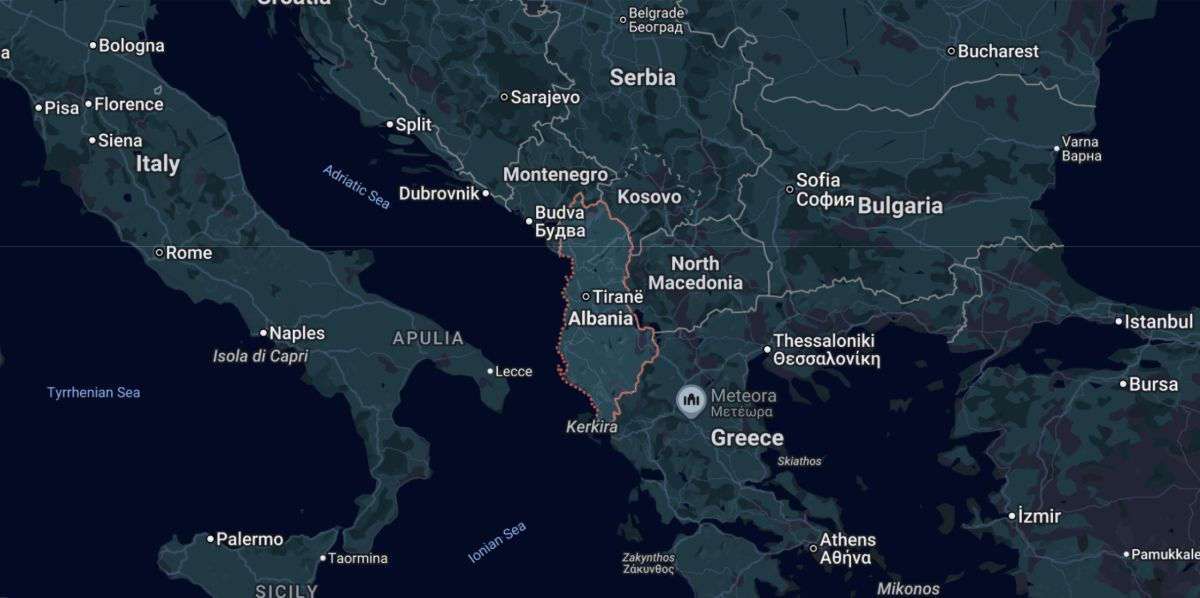
3. Albania’s ‘Cashless 2030’ Mandate
Albania has launched one of the world's most direct anti-cash operations.
Cashless Albania 2030 is a program to completely remove physical money from the Balkan country’s economy.
By the end of 2026, the Albanian government wants every single merchant in the country, no matter how small, to have electronic payment devices installed.
As in, don’t take card? Risk getting shut down.
The program aims to eliminate cash transfers in public institutions this year, too. So citizens will no longer be able to pay for state services or taxes with physical money.
On top of this, Albania is also slashing its cash-payment ceiling to L500,000 Lek (~USD $5,300) as a step toward becoming cashless by the end of the decade.
Driving dark capital into the light
Why are these, and other, nations putting so much energy into forcing capital out of cash and into digital?
Official narratives are about what you’d expect; anti-money laundering, crime prevention, financial security.
But there are, of course, other aspects to this trend which governments and central banks are less eager to broadcast publicly.
In Israel’s case, the cash crackdown is connected to existential fiscal survival.
While a ‘stable’ government deficit is generally considered to be around 3% or less, Israel’s shot up to nearly 7% a couple of years ago as it spent more on defense and military reservist payments.
To keep their credit rating from worsening, they need to turn this around. Which means they need to collect more tax to cover the extra spending.
By switching to a ‘cash is crime’ policy, the government can bring the approximately ₪2 trillion (~USD $530 billion) suspected to be ‘black capital’ currently outside the tax net.
For context, this 'missing' capital is nearly four times the size of Israel's current annual budget deficit.
Denmark’s war on cash, though, is part of a broader Digital Social Model.

Danmarks Nationalbank, the central bank of Denmark
Not only does the Nordic country struggle with a two-speed economy — domestic growth lags its global pharmaceutical exports — but they have an aging population which requires funding, and therefore tax revenue.
Getting cash out of mattresses and into the high-velocity, taxable digital grid allows the Danish government to better deal with both of these challenges.
For Albania, the ulterior motive to its Cashless 2030 drive is bigger than just the national budget.
The Balkan nation is attempting to join the European Union.
And if you want in, you have to meet strict fiscal conditions.
So when nearly a third of your economy is likely operating in the shadows, untraceable and untaxable, you need to make huge structural changes if you want a shot at becoming EU-compliant (and accessing the bloc’s €6 billion Western Balkans growth fund).
The not-so-invisible hand
As of early 2026, the War on Cash is raging across about 40 nations.
While the methods vary — ranging from daily spending caps to the total deletion of high-value banknotes — the path is consistent: Moving from a physical and private to digital and surveillable.
The nations I’ve profiled today give you an idea of how, and under which narrative, governments and citizens are dealing with this.
But they are just four examples; the March 2026 Swiss referendum, Israel’s and Albania’s mandate to bring ‘dark capital’ within range of taxation, and the economic and demographic challenges Denmark is trying to overcome by demonetizing cash.
There are many other cases — some extreme — playing out in the world right now.
In Greece, for example, it’s now illegal to pay for anything worth more than €500 in cash (the most restrictive such law in the EU).
In China, the e-CNY (Digital Yuan) is now a core part of the economy.
In Tier-1 cities, the infrastructure is so heavily optimized for QR and biometric payments that physical cash has effectively been starved out of daily utility — no explicit ban required.
The United States, on the other hand, is currently pushing legislation that protects cash.
Not only is there no active federal push to abolish cash, but legislative energy is focused on mandating cash acceptance.
New York State, for example, just passed a new law requiring nearly all retail and food establishments statewide to accept cash for in-person transactions.
Businesses that refuse face civil penalties of up to $1,500 per violation.
Depending on where you’re reading this, you might have your own experience or opinion on physical money’s role in your local economy (taxable or otherwise).
Reply to this and let me know.
This week's quote:
“The shadow economy is the true laboratory of globalization. It is the only place where the laws of supply and demand are never interrupted by the hand of the state.”
— Loretta Napoleoni, Author of Rogue Economics
Invest in knowledge,
Thom
The Benchmark
Share: Forward this email to someone you know would appreciate it.
New here? Subscribe to The Benchmark.
Enjoyed this issue?
Subscribe to The Benchmark
Weekly insights on markets, investing, and portfolio strategy.