
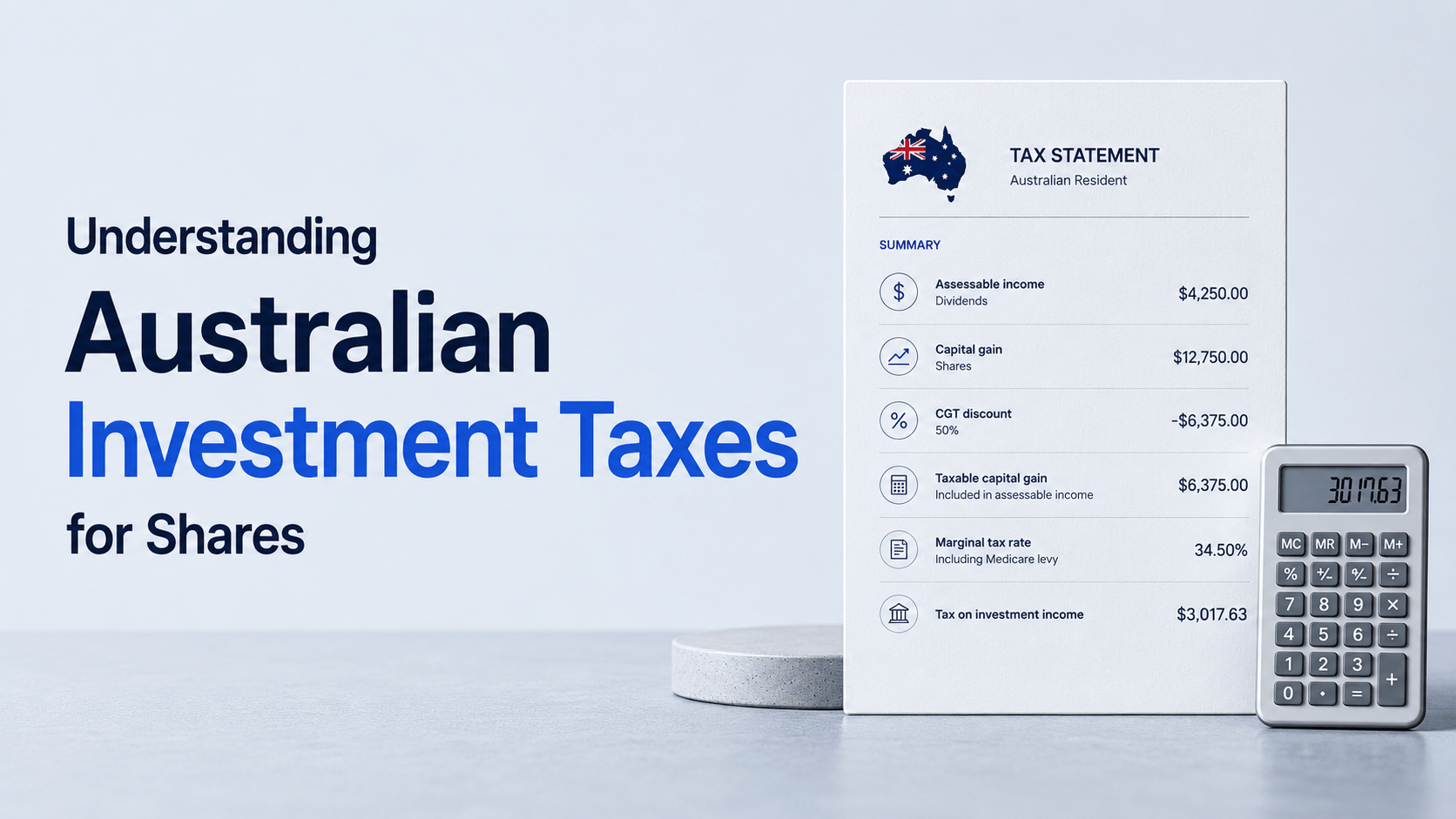
Investing in shares is one way Australians build wealth over time.
But once you start buying, holding and selling investments, tax becomes part of the picture.
This guide explains the two main tax areas Australian share investors should understand: investment income tax and capital gains tax.
It is general information only and does not take into account your personal circumstances.
.png)
Why investment tax matters
Taxes can affect your overall investment return.
That does not mean tax should drive every investment decision. But it does mean good records matter.
If you invest in shares, ETFs or managed funds, you may need to keep track of:
- buy and sell trades
- brokerage
- dividends
- ETF distributions
- franking credits
- dividend reinvestment plans
- annual tax statements
- realised capital gains and losses
In Australia, the two main tax areas for share investors are:
- investment income tax, which can apply to dividends and distributions
- capital gains tax, which can apply when you sell an investment
Each has its own rules and record-keeping requirements.
Capital gains tax
Capital gains tax, often called CGT, can apply when you sell an investment for more than your cost base.
In simple terms, if you buy shares for one price and later sell them for a higher price, you may have made a capital gain.
If you sell for less than your cost base, you may have made a capital loss.
Your cost base can include more than the original purchase price. It may also include brokerage and other eligible costs.
CGT can become more complex if you have:
- bought the same share multiple times
- sold only part of a holding
- used dividend reinvestment plans
- transferred holdings between brokers
- held ETFs or managed funds with cost base adjustments
Australian tax residents may also be eligible for a CGT discount on eligible assets held for at least 12 months, depending on their circumstances and the rules that apply.
In our detailed CGT article, we explain:
- what a capital gain or loss is
- how CGT can apply to shares
- why cost base records matter
- how holding periods can affect reporting
- how Navexa helps track realised gains and losses
Read more about Australian capital gains tax.
Investment income tax
Investment income is income you receive while holding an investment.
For share investors, this commonly includes dividends.
For ETF and managed fund investors, it can also include distributions with multiple tax components.
Investment income may include:
- franked dividends
- unfranked dividends
- franking credits
- ETF distributions
- trust income
- foreign income
- foreign tax offsets
- interest income
Dividend reinvestment plans, often called DRPs, can also matter.
Even when a dividend is reinvested into more shares instead of paid as cash, it may still need to be included in your income records. The new shares or units may also affect your cost base for future CGT calculations.
ETF distributions can be more complex than ordinary dividends because annual tax statements may include final tax components and adjustments that are not obvious from the cash payment alone.
In our detailed investment income tax article, we explain:
- how dividends are generally taxed
- what franking credits are
- why DRPs matter
- how ETF distributions can differ from company dividends
- why AMIT and annual tax statements are important
- how Navexa helps track investment income
Read more about Australian investment income tax.
Good records make tax time easier
Investment tax reporting is easier when your portfolio records are up to date.
The key point is simple: your broker or bank account may not always show the full tax picture.
Cash payments, dividend statements, ETF tax statements, DRPs, brokerage and cost base adjustments can all matter.
That is why many investors use portfolio tracking software to keep their records clearer throughout the year, not just at EOFY.
How Navexa helps
Navexa helps Australian investors track portfolio performance, dividends, distributions, realised gains, unrealised gains and tax reporting data in one place.
You can use Navexa to review portfolio records such as:
- trades
- income
- franking credits
- ETF and trust distributions
- DRPs
- realised capital gains and losses
- taxable income report data
- ATO myTax report data
Navexa does not provide personal tax advice or lodge your tax return.
It helps you organise and review your portfolio data, so you can prepare clearer information before speaking with your accountant or tax adviser.
Final thoughts
Australian investment tax can feel complicated, but the big picture is easier when you separate it into two areas.
Income while you hold investments.
Gains or losses when you sell investments.
Once you understand that split, the next step is keeping better records.
Navexa helps Australian investors track their portfolio, income and tax reporting data in one platform.
Start your 14-day free trial and see how clearer portfolio tracking can help you stay organised.
Disclaimer: This article is general information only and does not constitute financial, legal or tax advice. It does not take into account your personal circumstances. Tax rules, platform features and legislation may change. Always speak with a qualified professional before making financial, legal or tax decisions.